
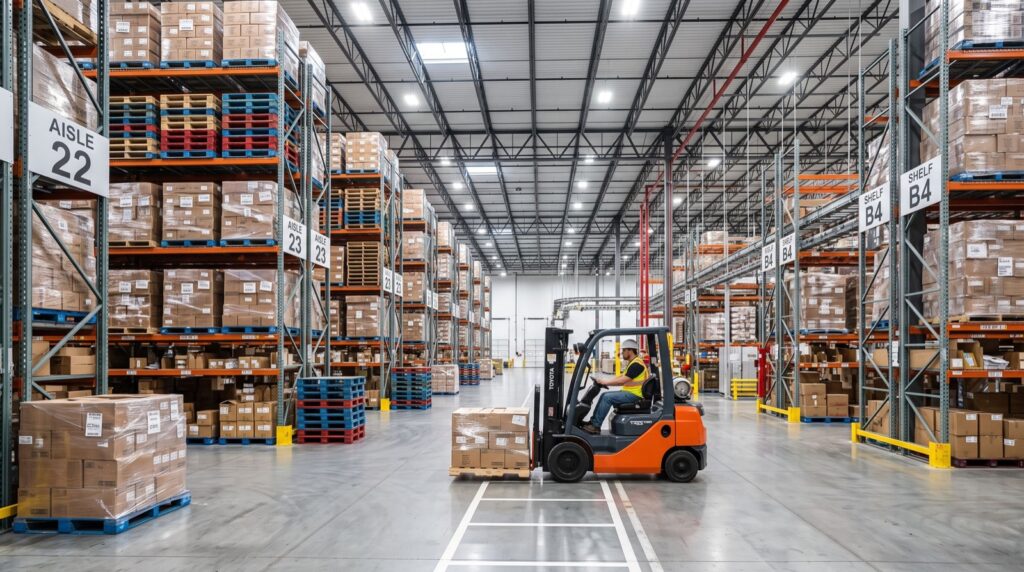
Ask most people to picture a warehouse and they imagine towering freezers packed with frost-covered pallets. Yet a huge share of everything moving through Jeddah’s busy commercial corridors never needs to be frozen or even chilled. Sacks of rice and flour, cases of canned goods, cartons of tea and spices, cleaning supplies, packaging, and countless other everyday products simply need a clean, dry, well-organised roof over their heads. This is the quiet world of dry and ambient warehousing, and it keeps the city’s trade moving far more than most shoppers ever realise.
Jeddah has always been a gateway. As a Red Sea port and a hub for pilgrims, importers, and manufacturers, it handles a constant river of goods that must be stored somewhere sensible between arrival and sale. This article explores how dry storage works, why it matters so much in a coastal climate, and what businesses should look for when they hand their inventory to someone else’s shelves.
What Dry Storage Actually Means
Dry, or ambient, storage covers any product that stays stable at normal indoor temperatures without refrigeration. That sounds simple, but it hides real complexity. The goal is not just to keep goods out of the sun; it is to protect them from humidity, pests, dust, and the slow degradation that ruins packaging and shortens shelf life. A well-run dry warehouse is a controlled environment, even if it never dips below room temperature.
In practice this means managed ventilation, sealed loading bays, moisture control, and disciplined stock rotation so nothing sits forgotten in a corner until it expires. The best facilities treat ambient goods with the same seriousness a cold store gives its frozen inventory, because a warehouse full of damp, rodent-damaged flour is worth no more than a freezer that has thawed.
Why Jeddah’s Climate Raises the Stakes
Coastal cities carry a particular challenge that inland warehouses rarely face: humidity. The moist Red Sea air can creep into poorly sealed buildings and settle into cardboard, paper labels, and dry foodstuffs, encouraging mould and clumping long before an expiry date arrives. A warehouse that would perform perfectly in a dry desert town can quietly fail in Jeddah if it ignores this reality.
Heat compounds the problem. Even goods that do not require refrigeration can suffer when interior temperatures climb, from melted confectionery to warped plastics and degraded chemicals. Serious operators design their buildings to breathe, to stay cool, and to hold moisture at bay, understanding that ambient storage in this environment is an active discipline rather than a passive shed.
The Backbone of Local Trade
Behind every well-stocked shop shelf sits a network of storage that most customers never see. Wholesalers hold buffer stock so retailers never run dry. Importers stage shipments so they can clear customs and distribute in orderly waves. Manufacturers park raw materials and finished goods until orders call them forward. All of this depends on flexible, reliable dry space.
For businesses that move steady volumes of shelf-stable products, professional Dry Storage in Jeddah turns a logistical headache into a manageable, predictable process. Instead of cramming inventory into a cramped shop back-room or renting an unsuitable unit, a company can hold exactly what it needs in a facility built for the job, then draw on it as demand dictates.
How the Food and Beverage Sector Relies on Ambient Space
Restaurants, caterers, and cafés are often associated with fridges and freezers, but a striking amount of their inventory lives at room temperature. Bulk grains, oils, canned tomatoes, dried pulses, flour, sugar, bottled drinks, and packaging all need dry, secure, well-managed storage that a busy kitchen simply cannot spare the floor space to provide.
This is why dedicated Storage for Restaurants has become such a practical solution across Jeddah’s hospitality scene. By moving bulk ambient stock off-site, an operator can buy in economical quantities, keep their kitchen uncluttered and compliant, and rely on a single organised source rather than scattering supplies across cupboards, corridors, and improvised shelving.
Organisation Is the Real Product
The value of a good warehouse lies less in its walls than in how it is run. A disorganised space, however large, breeds lost pallets, expired stock, and slow retrieval that gums up an entire supply chain. A well-managed one turns storage into a service: goods are logged on arrival, placed by category, rotated so the oldest leaves first, and picked quickly when an order comes in.
Modern inventory systems make this visible in real time, letting a business see exactly what it holds and where without setting foot on the floor. That transparency prevents the two most common and costly warehouse failures, running out of a critical item unexpectedly and discovering a pile of stock that quietly aged past usefulness. Good organisation, in other words, is not overhead; it is the entire point.
Choosing the Right Storage Partner
Handing inventory to an outside facility is an act of trust, and it deserves careful thought. Businesses should look for climate-appropriate buildings, honest security, clean and pest-controlled interiors, clear stock reporting, and a location that keeps transport short and cheap. Flexibility matters too, since the space a company needs in a quiet month rarely matches the space it needs before a busy season.
Partnering with reputable service experts who understand local conditions and logistics can be the difference between storage that helps a business grow and storage that quietly holds it back. The strongest providers behave like partners rather than landlords, communicating openly, adapting to changing needs, and treating a client’s inventory with the care it deserves.
Key Takeaways
- Dry and ambient storage protects shelf-stable goods that never need refrigeration but still require careful conditions.
- Jeddah’s coastal humidity and heat make active moisture and temperature control essential, not optional.
- Reliable dry warehousing underpins wholesalers, importers, manufacturers, and retailers across the city.
- Food and beverage businesses depend heavily on off-site ambient space for bulk grains, oils, and packaging.
- Organisation, rotation, and real-time inventory visibility are what turn a warehouse into a genuine service.
- The right storage partner offers climate-appropriate buildings, security, transparency, and flexible capacity.
The Unsung Engine of a Trading City
Dry storage will never look as dramatic as a frozen chamber, and it rarely earns a headline. Yet without it, Jeddah’s shops would empty, its restaurants would scramble, and its importers would drown in shipments they had nowhere to keep. This unglamorous infrastructure is precisely what allows a fast-moving trading city to function smoothly, day after day, through every season.
For any business that deals in physical goods, treating storage as a strategic decision rather than a last-minute necessity pays off quickly. Choose a facility that respects the climate, runs on genuine organisation, and communicates honestly, and warehousing stops being a cost to endure. It becomes a quiet advantage that keeps products safe, customers supplied, and the whole operation moving with confidence.